How to Read a GC Report Like an Expert
When buying a lavender essential oil, have you checked Gas Chromatography (GC) report. Think of it as the plant's unique fingerprint. It shows every single chemical compound inside the bottle. Without it, you are buying blind. Here is how I read these sheets on my farm to spot premium quality—and catch the fakes.
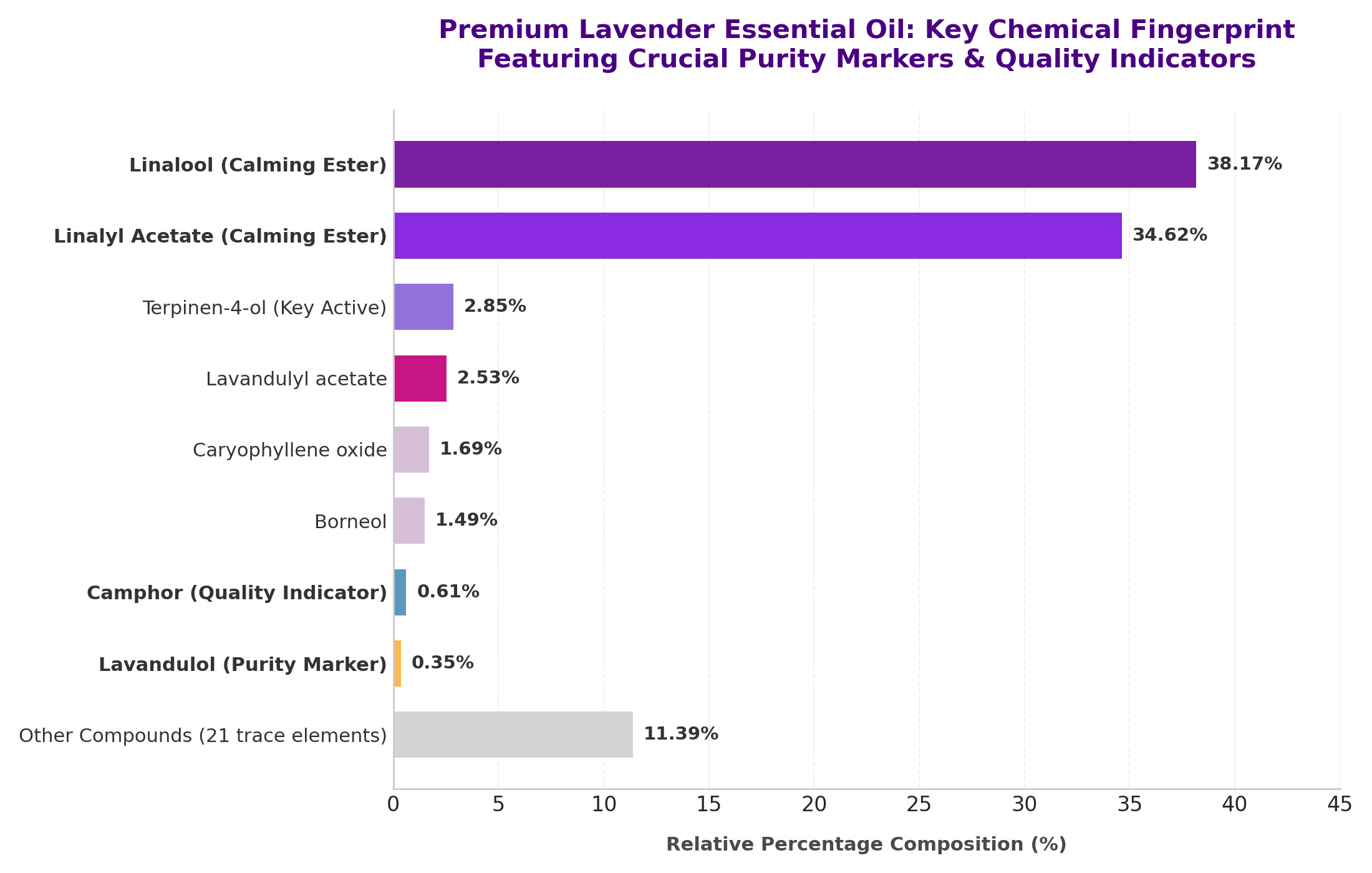
Lavandula angustifolia Super Blue Cultivar
Find the "Big Two" Esters
First, run your eyes down the "Relative Area" column. You are looking for two main compounds: Linalool and Linalyl Acetate. These are the natural components that make lavender smell sweet and soothe the nervous system.
In a top-tier English Lavender, these two should dominate the sheet. For example, in our farm's recent distillation, Linalool sits at 38.17% and Linalyl Acetate is at 34.62%. If these numbers are low, or if they are wildly unbalanced, the oil will not give your clients that deep, relaxing feeling they expect.
Check the Camphor Level
This is the ultimate test. True English Lavender (Lavandula angustifolia) must be very low in camphor. Look at the report. You want to see camphor levels under 1%. Our test shows a tiny 0.61%. If you see a number like 8% or 10%, you are holding a hybrid oil (like Lavandin) or a diluted blend. It will smell sharp, like eucalyptus. It is great for clearing stuffy noses, but it will wake your clients up instead of putting them to sleep.
Hunt for the "Nature Marks"
Lab-made synthetic oils are clever. Chemists easily mix synthetic Linalool and Linalyl Acetate to mimic the smell. But they cannot easily replicate the hundreds of tiny trace elements that grow in real soil. I always look for Lavandulol and Terpinen-4-ol. In our report, we have 0.35% Lavandulol and 2.85% Terpinen-4-ol. If these columns show a flat zero on your supplier's report, you are paying for cheap, lab-made fragrance oil. Your clients deserve the real plant.
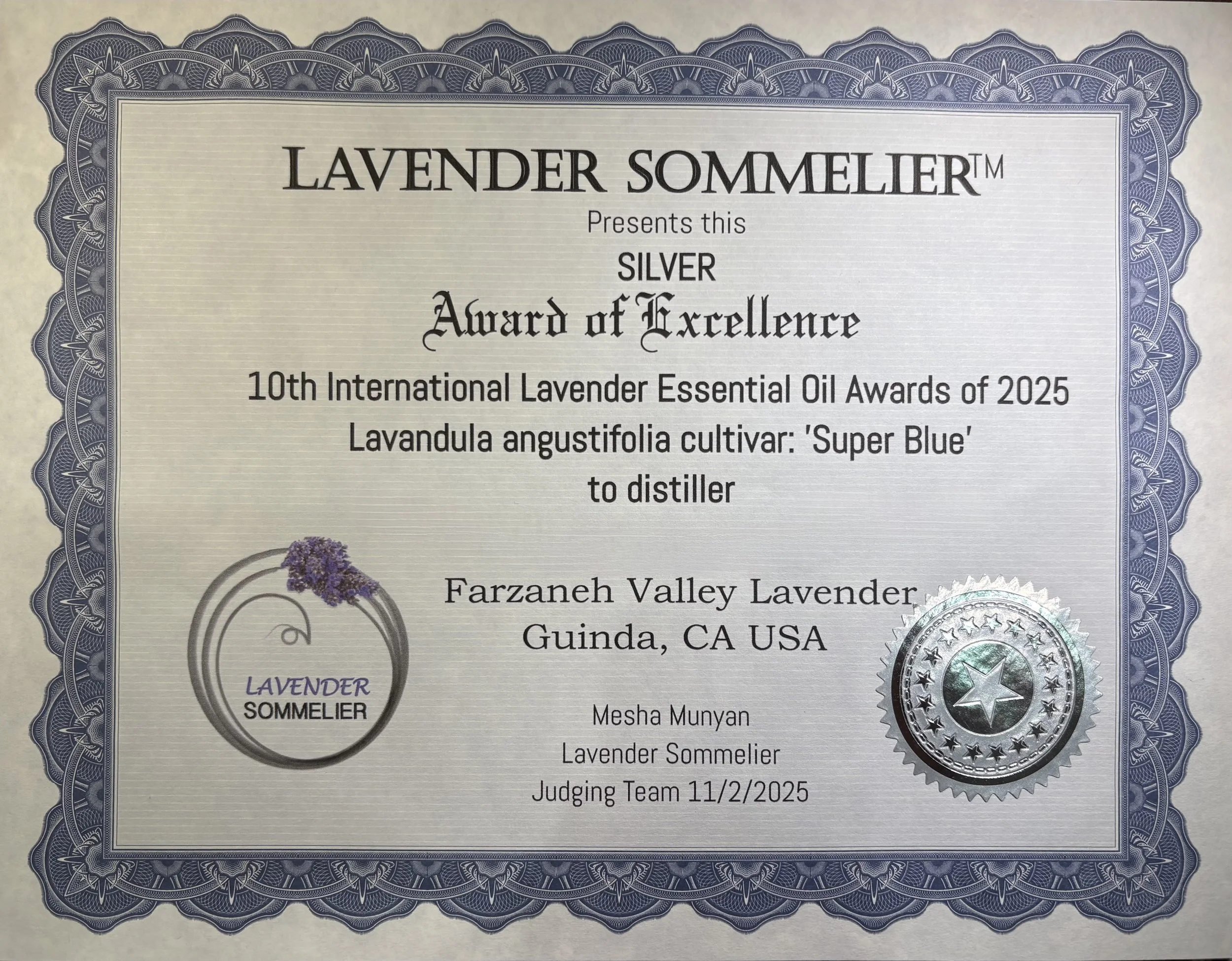
Lavandula angustifolia Super Blue Cultivar recieved Silver Award of Excellence for Essential Oil
Do you have a GC report from your current supplier that you would like us to look over together, or would you like to learn more about how different harvest times of the year affect these percentage numbers?